

Dried Mushroom Shelf Life: Storage and Spoilage Signs
Dried mushrooms can last 6 months to 1 year, according to Kentucky Cooperative Extension’s mushroom guide. But that range assumes the mushrooms stay dry. An opened packet beside a steamy stove and a tightly closed jar in a dry cupboard can age very differently.
That is the useful way to think about dried mushroom shelf life: the date matters, but so does everything that happens to the batch after drying.
Turning Storage Habits Into a Shelf Life Check
Warning Signs That Dried Mushrooms Are Declining
How Temperature, Light and Humidity Affect Storage
How Packaging Changes the Storage Timeline
Water Activity and the Moisture That Matters Most
Why Dried Mushrooms Lose Quality Over Time
Table of Contents
- Dried Mushroom Shelf Life Starts With Moisture
- What Packaging Can and Cannot Do
- Where to Store Dried Mushrooms
- How to Spot a Problem
- A Quick Check Before You Put Them Away
Dried Mushroom Shelf Life Starts With Moisture
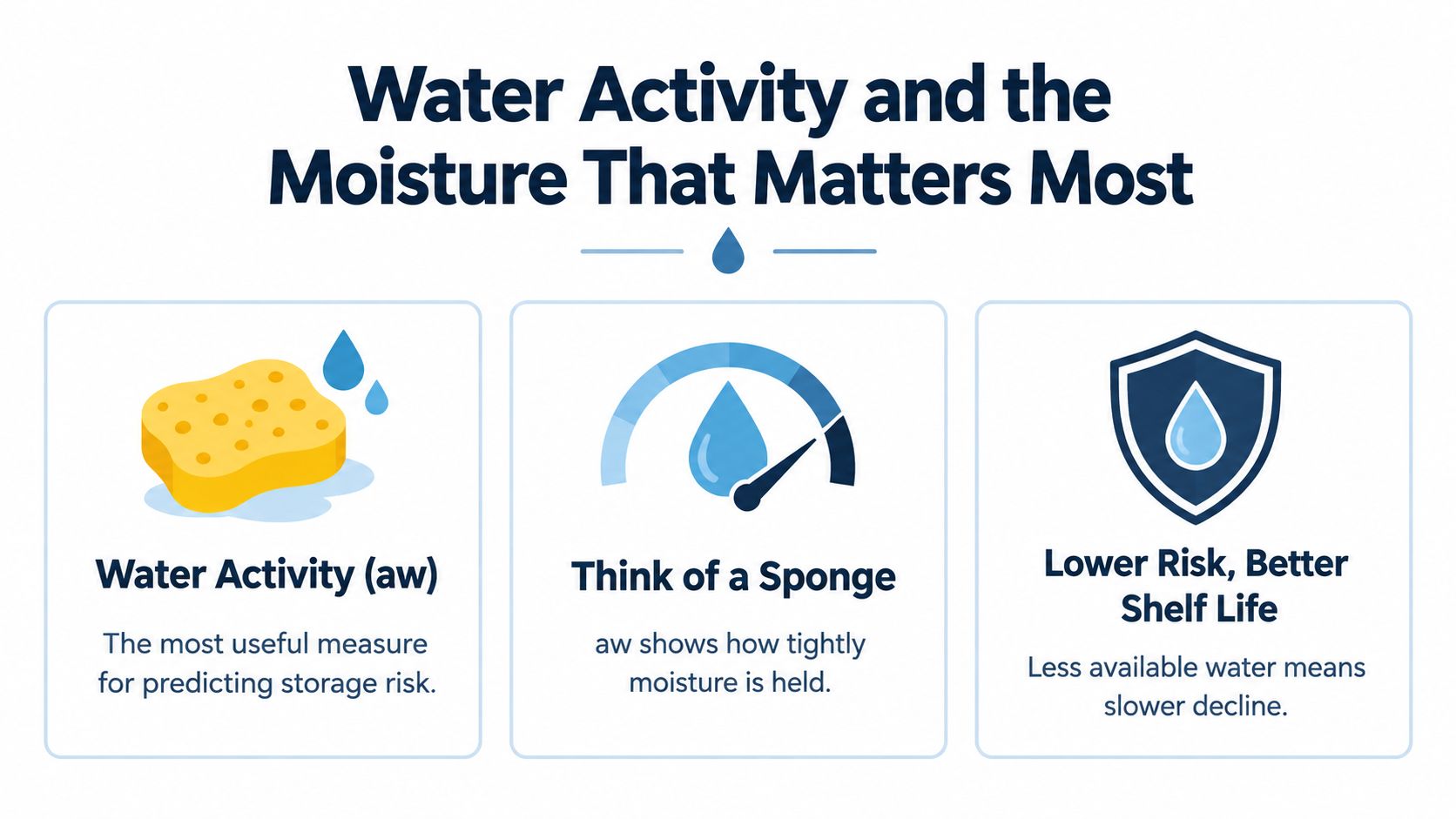
Drying limits the water available to microorganisms, but dried food can absorb moisture again. Scientists measure available water as water activity, often written aw. It is different from total moisture: two foods can hold similar amounts of water without making the same amount available for microbial growth.
FDA guidance on water activity identifies an aw of 0.85 or below as a threshold relevant to controlling pathogenic bacteria in shelf-stable foods. A mushroom-dehydration review discusses a lower target, below 0.60, for broader inhibition of microbial growth. Neither number means a jar is sterile or that its contents will stay dry after opening.
If you dry mushrooms at home, the drying-techniques resources offer additional reading. Let a dried batch cool completely before sealing it; warmth trapped in a container can become a condensation problem.
What Packaging Can and Cannot Do
A moisture-resistant container with a reliable seal gives dried mushrooms a better chance of staying dry. Still, no packaging method gives every mushroom the same expiration date.
An oyster-mushroom packaging experiment compared ordinary heat-sealed bags with vacuum-packed bags. It reported acceptable quality for about two months in the ordinary bags and beyond three months in the vacuum-packed bags under its study conditions. Those findings are a packaging comparison, not a deadline for every species, bag or pantry.
| Packaging method in the study | Reported acceptable-quality period | What it tells you |
|---|---|---|
| Ordinary heat-sealed bag | About 2 months | One result under the tested conditions |
| Vacuum-packed bag | Beyond 3 months | Less air exposure helped in that comparison |
The mushroom-packaging resources cover related storage questions. A packaged food such as Vitamin Planet’s Clearspring organic shiitake mushrooms may also carry its own storage directions. Follow the package instructions, but check an opened batch’s condition too.
Where to Store Dried Mushrooms
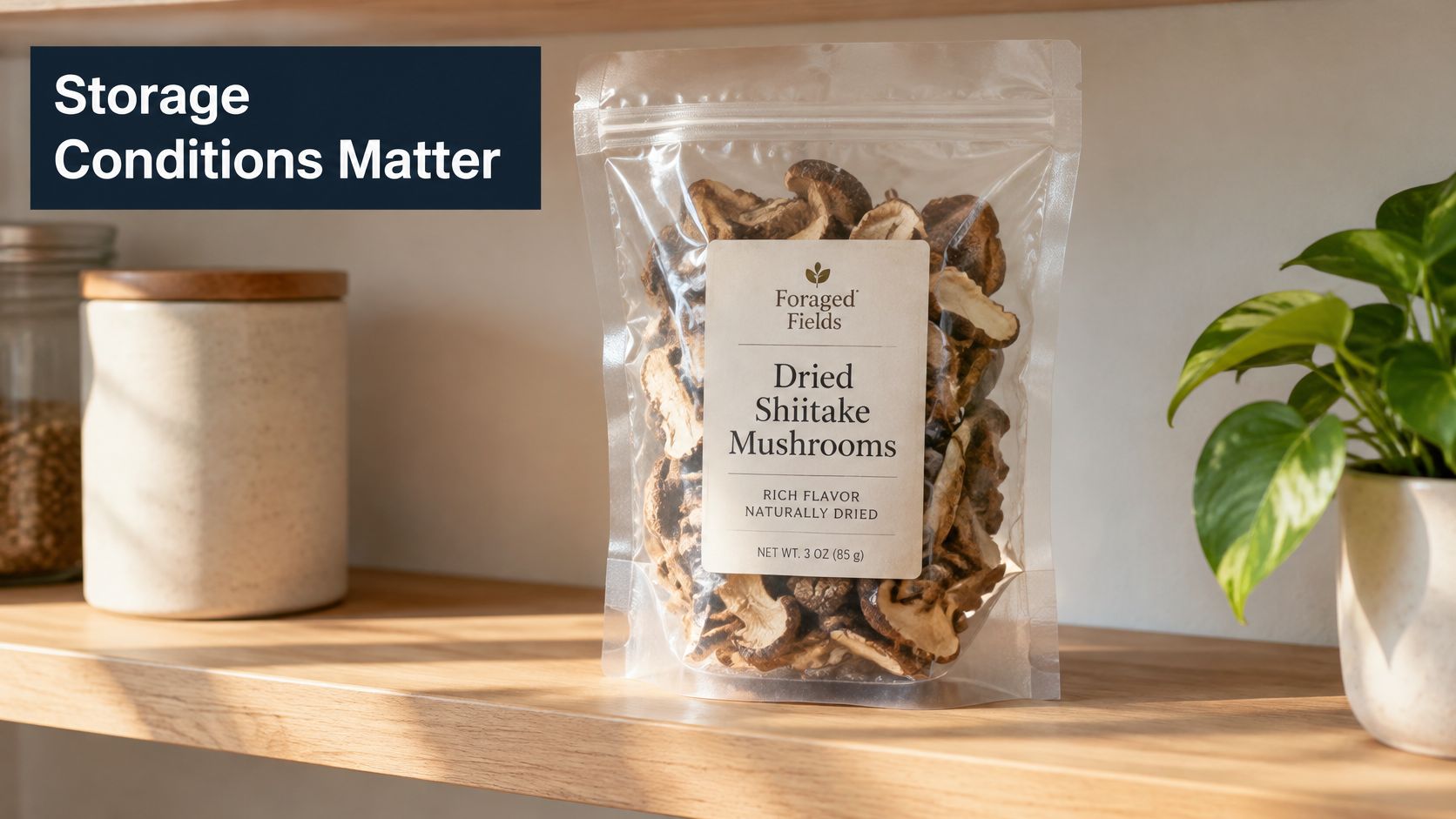
Choose a cool, dry, dark place, away from steam and temperature swings. Each time you open the container, the contents meet the room’s air. That matters more in a humid kitchen than in a dry one.
A mushroom post-harvest review discusses storage of dried mushrooms in airtight containers. Treat its reported shelf-life observations as context, not a promise for an opened jar.
For psychoactive mushrooms, freshness and potency are separate questions from food safety. The guide to psilocybin species, strains and potency explains why a name cannot guarantee a batch’s measured potency. The species and strains visual guide gives more context for those labels. Neither can tell you whether a particular stored batch is safe to consume.
You might see similar pantry advice in TOO MATCHA’s guide to keeping matcha fresh for longer. It is a comparison about moisture and storage, not evidence for mushroom shelf life.
How to Spot a Problem
Before using an older or opened batch, check both the container and the mushrooms. Discard the batch if you see mold. Condensation inside the package or mushrooms that feel damp also point to a moisture problem; do not treat resealing as a fix.
- Dampness or softening: Compare the pieces with their original dry texture.
- Clumping: Look more closely if pieces stick together and feel damp.
- Condensation: Droplets inside a jar or bag mean moisture is present.
- Visible mold: Do not try to sort around it or use the rest of the batch.
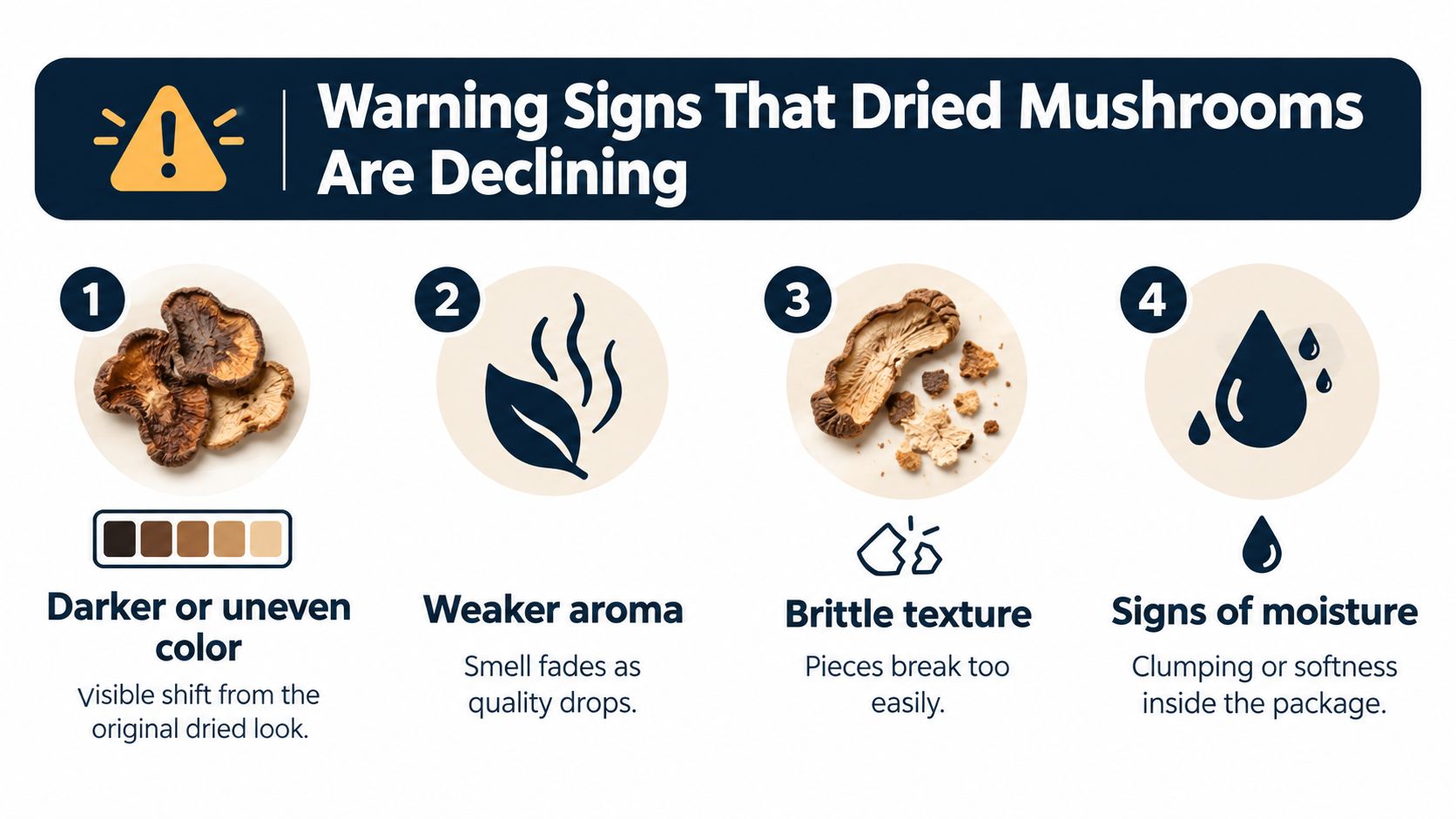
Brittleness alone is not spoilage: properly dried mushrooms may already be brittle. A clean appearance is not proof of safety, either. See the food-safety resources for broader background.
A Quick Check Before You Put Them Away
Ask three questions: Were they thoroughly dried? Has the container stayed sealed and dry? Has anything changed? The date helps frame those answers, but cannot replace them. If a batch seems damp, shows condensation or has visible mold, do not rely on a new container to make it suitable for storage.
For a batch that remains dry, close the container tightly and put it somewhere protected from humidity. A desiccant can help manage residual moisture, but it cannot correct inadequate drying or a leaky seal. The food-preservation resources offer more on storage practices.
Psilocybin adds another distinction: research on storage and degradation describes why potency can change even when a mushroom looks unchanged. The guide to how potency is measured explains why testing is a snapshot, not a lifelong guarantee. Our batches have a Rose City Laboratories certificate of analysis, but a COA does not predict how home storage will affect an opened batch.
The practical takeaway: store dried mushrooms sealed, cool and dry, then judge an opened batch by its storage history and condition, not the calendar alone.
References
- Kentucky Cooperative Extension, mushroom guide.
- FDA, water-activity guidance.
- Mushroom-dehydration research review.
- Oyster-mushroom packaging experiment.
- Mushroom post-harvest review.
For related educational reading, visit Imicrodosing.com.